Author Archives: Rosanne Parry

Middle Grade Monday Book Review: Open Mic: riffs on life between cultures

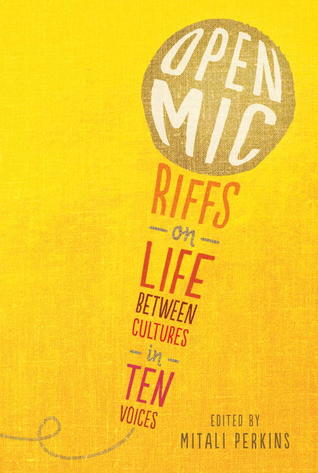
17262283Ten authors — some familiar, some new — use their own brand of humor to share their stories about growing up between cultures. Henry Choi Lee discovers that pretending to be a tai chi master or a sought-after wiz at math wins him friends for a while — until it comically backfires. A biracial girl is amused when her dad clears seats for his family on a crowded subway in under a minute, simply by sitting quietly between two uptight women. Edited by acclaimed author and speaker Mitali Perkins, this collection of fiction and nonfiction uses a mix of styles as diverse as their authors, from laugh-out-loud funny to wry, ironic, or poignant, in prose, poetry, and comic form.

Three things for a middle grade reader to love

1. As the editor of this collection Mitali Perkins says, “humor crosses boarders like no other literary device. Shared laughter fosters community and gets us talking about issues that might otherwise case division or discomfort.” Here are ten wonderful jumping off places for family and classroom conversation.

2. I’m delighted to see the graphic novel format represented in a short story collection and I think Gene Luen Yang has something particularly valuable to share: the experience of speaking out against a film he felt represented his race unfairly. The unexpected happy ending was an invitation to write a better story himself from Dark Horse Comics. (Hurray for my hometown comics publisher!)

3. I found the most poignant story the one Olugbemisola Rhuday-Perkovich wrote about her own experience as a high achieving student applying for college. Perhaps because one of my children is a senior this year and is in the throes of college acceptance drama, it struck a particular chord. In some ways it is the most YA of the stories as it deals so directly with college admissions but I think the experience of high achieving minority students is fraught with this particular brand of prejudice long before senior year.

Something for myself to think about as a writer

My godparents gave me a book of short stories when I was 8 years old. I remember because it was the first “grown-up” book I’d ever received as a gift. I’ve always loved short stories and this collection made me think about why I love them so much. The truth is, the story Rhuday-Perkovich wrote about college admissions could have been a whole novel. Most high schools have that pack of kids who take AP classes and compete on the debate team and get involved in music or drama. She could have written a novel. The story Francisco X. Stork wrote about a brother and sister enfolding their younger gay-but-not-out brother in that unwise but fiercely protective love siblings have for each other, could have been a novel too. But I love the impact of the shorter form. It forces the writer to sift through a multitude of ideas and information about a character and present only the most powerful moment. Concentration. Focus.

I’ve just finished a full novel revision and am engaged in that lengthiest of ping pong games, the editorial process.  I think, what ever else I accomplish in February I want to write at least a half dozen short stories, just to see what new story ideas will bubble up in this new year.
 

Middle Grade Monday Book Review: Seven Stories Up by Laurel Snyder


17883943
I
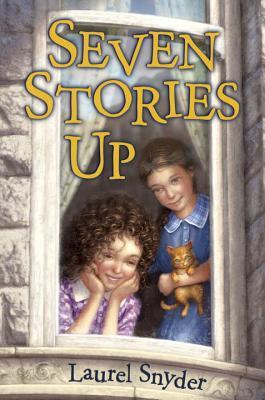
n this companion to Bigger than a Breadbox  a leap back in time and an unlikely friendship change a family forever. Annie has never even met her grandmother before.  In fact, she’s never had much family to speak of.  So when she and her mother pull into the drive of her grandmother’s home in Baltimore, Annie can hardly contain her excitement!

But when she actually meets her grandma, the bitter old woman doesn’t seem like someone Annie could ever love, or miss.  Until one magical, stormy night changes everything.

It’s impossible that Annie could have jumped back in time. . . right? But here she is in 1937— the year her grandmother was just her age!  Molly is an invalid. She lives by herself, on the top floor of a hotel.  She seems a little lonely, but friendly and fun, nothing like the horrible old woman Annie just met.

Annie entices Molly down from her room, and together the two girls roam. They sneak around the grand hotel, and explore the brick streets of old Baltimore. Carnivals and taxis, midnight raids on the kitchen.  The two grow closer.

But as Molly becomes bolder, and ventures further from the safety of her room, Annie begins to wonder how she’ll ever get back home. Maybe she’s changed the past a little too much. . .

3 Things for a Middle Grade Reader to love

1. TIME TRAVEL! One of my favorite kinds of story when I was a MG reader. And not some grand cloak and dagger plot but a unique friendship story set cosily within a single family.

2. The level of detail for the 1937 setting is just right. Lots of rich imagery and vivid details about city life in Baltimore, but not heavy handed historical themes. There were difficult things going on in this country in the late 30s and Snyder does a good job of mentioning them without highjacking the story. I had an ARC to read which suggested that there will be illustrations at the chapter headings but I haven’t seen them. Even without illustrations I had no trouble picturing the particulars of the setting.

3. There’s a dumb waiter! I was fascinated by those as a child. The details of sneaking in and out of the hotel are great! I remember climbing through the laundry chute and out the window and shinnying down drainpipes–not that I needed to mind you–I did all this for the sheer entertainment of it. Great fun! Okay, to be fair, there are sad bits. But I was totally won over by the fun and the sad parts only made the skulking around more appealing.

Something for a writer to think about

I am not brave enough to write a time travel book. I love them. They seem hopelessly complicated to me and bouncing back and forth, I think, can be a lot to ask of a reader. I really like how the time travel bit worked out in Seven Stories Up. I particularly like the way Annie’s character built herself a mental bridge of stories about her mother to keep the path home open. I do think that story, and family story in particular, is a way kids in trouble find their way home, like Hansel and Gretle’s pebbles in the forest.

How I found this book

Once again a non-objective review! Laurel is a friend and the ARC came to me by way of my regional sales rep. Thanks Deanna!


Middle Grade Monday Book Review: Rogue by Lyn Miller-Lachman


Rogue_JKT_FINAL-199x300

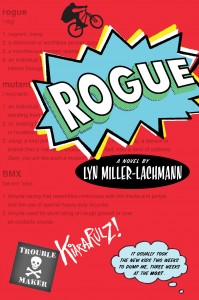
Rouge is the poignant story of a girl coping with Asperger’s syndrome as she navigates the foreign territory of friendship…

Kiara has a difficult time making — and keeping — friends. She has Asperger’s syndrome, so relating to other people doesn’t come naturally. Most of the time, she relies on Mr. Internet — her go-to when the world doesn’t make sense, which is often — and her imagination, where she daydreams that she’s Rogue, one of the mutant superheroes of the X-Men. In the comics, Rogue hurts anyone she touches, but eventually learns to control her special power. Kiara hasn’t discovered her own special power yet, but when Chad moves in across the street, she hopes that, for once, she’ll be able to make friendship stick. She’s even willing to keep Chad’s horrible secret, if that’s what it takes. But being a true friend is complicated, and it might be just the thing that leads her to her special power.

3 Things for a middle grade reader to love

I should begin with a caveat. This is marketed as a YA book and for good reason. It deals directly with a child who lives in a home where illegal drugs are being made. A middle school boy and one much younger, live in the house and are cruelly treated by their parents. That said there is very little in the way of swearing, no sex or romance, and the violence happens for the most part “off screen”. It’s not for a tender-hearted reader but I think it’s a valuable conversation starter for a kid with a taste for realistic fiction with a harder edge.

1. There are quite a few books about kids on the autism spectrum these days. Here is one written by a person with Aspergers Syndrome, and shows a keen insight into a kid who longs for friendship and connection even while her outward actions seem to signal the opposite. It also shows how vulnerable a highly intelligent child can be if she is not emotionally and socially sophisticated.

2. For kids who love real life drama and conflict with no magical solutions and no super powers or wise mentors to save the day, this is the perfect book.

3. BMX bike riding is really popular and I seldom see it portrayed in a book. I don’t see a lot out there for comic book fans to read that isn’t also a comic book. It would be a huge mistake to think that a kid who likes comics and graphic novels can’t or won’t read something else, so if you’ve got an X-men fan in your life, here’s a novel that’s likely to strike a chord.

Something for a writer to think about.

Something my own editor and I have gone back and forth on with each of my manuscripts is whether the character sounds authentic to his or her age. It’s a tricky problem because kids in real life sound worldly-wise one moment and babyish the next. A characters position in the family and region of the country have a huge impact on how sophisticated they sound. So how to capture the “true voice” of a character without confusing the reader about the characters age is always a challenge. I thought Kiara’s character did a good job of both sounding highly intelligent but also young for her age and naive.

How I came to review this book

As always I make no claims to objectivity. Lyn Miller-Lachman is a friend and gave me an ARC of her book. I would have reviewed this one many months ago but the kids in the carpool found it and passed it around and then another friend wandered off with it and then my own kids read it. Not that I pushed the book on them by any means, in fact I was rather put out when the book vanished for months. But I’m happy to have finally gotten a chance to read it.


The Retrospective Outline

To outline or not to outline

If you are looking to start a quarrel (or at least a passionate debate) in an MFA creative writing program, the topic of outlining is a winner every time. Having never taken an creative writing class or alas, even majored in English, I came to the debate late in the game and without a horse in the race. I believe that in the end each writer finds her own way, and no one system works for every writer. That said I think I have finally hit upon an outlining strategy that works well for me. I think of it as the Retrospective Outline. I’ve always intuitively resisted the initial outline as stifling but I know that sooner or later the structure of story needs attention, so I’ve taken to doing the outline after a full first draft is finished.

I finished a draft right before Christmas. It’s a story I’ve been working on for a while. Like a lot of writers I’ve heard from over the years, I’m better at beginnings and endings than middles. It’s very easy to lose focus in the middle and either write more scenes than you really need or not quite enough leaving gaps in the narrative. A friend recommended the screenwriting book Save the Cat and since I hope to write a screenplay in the next few months I thought I’d give it a try. Screenwriter Blake Snyder is a big advocate of laying out an entire movie in scenes, a note card for each scene. The scenes are put on a cork board, a row of cards for each of three acts, and rearranged or discarded as necessary. I was a bit skeptical at first but my studio has a lovely long empty wall painted in my favorite shade of red, so I gave it a try using post-it notes.

Drama in 3 Acts!

IMG_0807

When I first laid out my scenes it became immediately obvious that the second half of the second act was where the trouble resided. All the other sections had 7 to 10 scenes and the second half of the the second act had 16 scenes. Aha!

Then once I had an idea of where to look I went through each scene with an eye to which ones had strong conflict, and propelled the main character forward. It became pretty obvious which scenes were just there to convey information, had no inherent conflict, and took the focus off my main character and his journey.

But wait there was vital information in those scenes–not so much drama but stuff you have to know! That’s the hard part of of trimming your work, not letting go of a perfectly good scene that doesn’t serve the plot, but figuring out what to do about the bits of information. I ended up putting the info on a smaller post-it and finding a different scene where I could weave it in. The best part about the process was learning that really in the 5 scenes I cut, I only had 4 vital pieces of story information that eventually found a home early in the second act.

Integrating the Visual elements of a story

This particular book has a visual element–completely new ground for me. I added smaller blue post-its for the scenes that have an illustration. In an earlier draft the first illustration didn’t come until mid-way through the second act. (Pink is act 1, green is the two halves of act 2, and purple is the 3rd act.) It was clear in looking at the book as a whole that the 12th scene was too long to wait for a visual so I found a way to put one in the 3rd scene of the story. But then as I was working a really strong idea came along for a final image at the very end of the story, so I decided to look for a way to put an echoing image in the first scene. The result (I hope) is a much more balanced story.

So there you have it! One method for outlining a story. Maybe not everyone’s cup of tea but it helped me trim about 6,000 words that were not doing my story any good.

If your new year’s resolutions happen to include writing a novel for kids or teens, I’ve got a class starting up at the Loft Literary center. My Vampire-Free Fiction class starts the 20th of this month. You can get lots more information here


Giving Thanks for Indy Booksellers

Having just finished more than 30 book-related events in the last two months, I have a renewed appreciation for the importance of independent booksellers. They have not only welcomed me to stores in 5 states and 3 time zones. They’ve recommended my books to local libraries and schools, and featured my author talk on local radio. They’ve been willing to place my middle-grade historical novel not just in the kids section but also in the regional interest section, in the Native American history section and the Mock Newbery section. Indy booksellers read hundreds of books, not just the blockbusters but the new voices, the books for tender-hearted readers and (my favorite genre) Vampire Free Fiction! They are on their feet all day long taking customers needs to heart and leading them to the book that the Amazon algorithm will never show them.

I could hire a publicist to try to generate buzz for my book, but I could never pay someone to do what independent booksellers already do for free–share their passion for the printed word and their dedication to finding just the right story for everyone who walks through their door.

UnknownWhich is why I’m so excited to be participating in Indies First on November thirtieth. This project, the brain child of Sherman Alexie, pairs authors with local bookstores where they will spend several hours helping shoppers find the perfect book. More information here. I will be spending my time at the wonderful Spokane bookstore Aunties at 420 West Main Avenue. I’ll be there from 1-3. And I’m so proud to take my turn helping people find the story that’s just right for them. Stop by and say hi if you’re in Spokane, or go here for a list of which authors are coming to your local bookstore.

I have another reason to be grateful to independent booksellers. Just last week I got wordUnknown-1 that Written in Stone is on the short list for the PNBA’s Book Award. I’m honored to be included in an award which is not segregated by genre but considers all genres on an equal footing looking only for excellence, no matter the story’s audience. Thanks to the PNBA award committee for all their hard work.

And finally a big thanks to all the bookstores that hosted or helped me this fall including: Anderson’s  in Chicago, Annie Blooms in Multnomah Village, Rediscovered Bookshop in Boise, Aunties Bookstore in Spokane, Village Books in Bellingham, Mockingbird Books in Seattle, A Children’s Place in Portland, Green Bean Books also in Portland, Klindts in the Dalles, The Book Bin in Salem, The Linden Tree in Los Altos and Waucoma Bookstore in Hood River.

Oh yes, and Powells, of course. I am proud to be your colleague.

Do you have a favorite bookseller? Planning to celebrate Indies First at your local store? Let me know in the comments.