Author Archives: Rosanne Parry

Letters About Literature


This spring it was my great pleasure to serve as a judge for the Letters on Literature program which is sponsored by the Library of Congress. It’s a nation wide reading and writing contest for students from 4th to 12th grade. In this contest students are asked to reflect on a book, poem, or speech that influenced them personally and then write a letter to that author (living or dead) to describe how that work of literature affected them.  It’s one of the largest writing and reading programs in the country. Tens of thousands of students enter every year.

library-of-congress-logo
My role in this process came after the letters were sent in to the Library of Congress and after they’d gone through the preliminary screening. The Oregon State Librarian then received three batches of letters by grade school, middle school, and high school writers. She then assembled a team for each level with a public librarian, a school librarian and an author. We each got our batches of letters, 87 in my case, and a couple of weeks to read them. And then we had a very long conference call to choose a first, second, and third place winner and any letters we wanted to give an honorable mention. Each state winner goes on to a national competition. The winning letters are posted here on the Library of Congress website. http://www.read.gov/letters/ The 2013 winners have just been posted and are well-worth a read.

images
Here’s what I loved about the process of reading and selecting the winning letters. It reminded me yet again what an individual experience reading is. Every reader brings their whole self to the page and takes away their own unique experience of the story. What is for one reader overwhelming and scary is thrilling to another. What is utterly foreign for some readers will be as familiar as family others. And sometimes a reader will see something in a story that the author never intended, or even knew was there. One of the most surprising and moving encounters of my professional life was a meeting I had with a young Iraqi veteran. He had read my book Heart of a Shepherd in his adult English language class and told me that he felt my main character, the son of an army officer deployed to Iraq, was just like him. “He doesn’t have a heart for war but war seeks him.” he said. I was astonished that this man, who had fought against American forces would be open hearted enough to find a kinship with a child of an American soldier. This is a reader I never imagined would even find the book much less feel a connection to it.
And that is the beauty and I think the unique strength of story, it’s a participatory art in a way that performance-based arts seldom are. A book invites a reader to walk for a while in the world view of the story character. It asks a reader to use his or her imagination to fill in all the details not explicitly on the page. And best of all it invites a conversation not just with the author as happens with the Letters About Literature contest but also a conversation with friends and family and classmates and even a whole community of readers who’ve shared the experience of the book.images-1
If you are a teacher, I hope you’ll consider encouraging your students to give Letters about Literature a try next year. If you’re an author I hope you’ll consider volunteering to judge at the state level.
If you are lucky enough to live in Washington DC, Maryland, Virginia, Delaware, Pennsylvania, or West Virginia there is a summer writing contest called A Book That Shaped Me sponsored by the Library of Congress and the National Book Festival. It’s an essay contest for raising 5th and 6th graders. All the details are here: http://www.loc.gov/bookfest/kids-teachers/booksthatshape.html  There are cash prizes for state winners and finalists and the grand prize winners will be sent to the the National Book Festival to present their essays at a ceremony at the end of August.  Best of luck to all you avid readers and writers who will enter this summer.
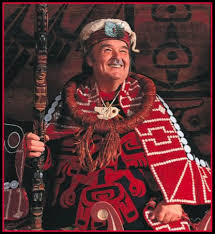
About the Lelooska Foundation

In her review of Written in Stone Debbie Reese took issue with the work of Chief Lelooska. To be clear, Lelooska is not in the story and is mentioned only briefly in the author’s note. Lelooska himself died in the late 1990s and his work is carried on by the Lelooska Foundation. Here is a link to more information about him and the Lelooska Foundation, for those who maybe following the conversation and be unfamiliar with the work of this author, illustrator, carver, linguist and historian. And here is a picture of Chief Lelooska in his traditional regalia.Unknown

I’m well aware, as Debbie has mentioned, that Lelooska was adopted into one of the bands of the Kwakwaka’wakw (also known as the Kwakiutl) tribe of British Columbia. Not everyone enjoys his art and not everyone likes the living history programs that he has provided in Washington for almost 40 years. I’m not interested in changing Debbie’s mind on this point. However hers is not the only opinion on the topic. Native Americans are not monolithic in their views and some of them are very much in favor of sharing their traditional arts with the wider community.

Among the tribes of the Pacific northwest, the right to tell a traditional story with its accompanying song, dance, and regalia is conferred in a potlatch. Lelooska’s right to share the stories he does was given to him by Chief James Aul Sewide and witnessed and agreed to by all the tribal members and neighboring tribes present at the potlatch. If they did not wish for Don Smith to become Chief Lelooska they could have chosen not to come to the potlatch. But they came, which is all the evidence I need to determine that he is doing this work fairly and in keeping with the traditions of the Kwakwaka’wakw. The tribe had the opportunity to deny the Lelooska Foundation the right to perform their living history programs after Lelooska died. But they came to the potlatch for his brother Tsungani and again conferred on him the ownership of the stories his family continues to present to the public.

I received an email just last week from the head of the planning team who was hired by the Quinault to relocate the village of Taholah out of the tsunami inundation zone. My book was recommended to him by somebody from the tribe as a vehicle for understanding them better. He’s aware of the weight of this project, to move a village site more than a thousand years old. He and his team want to make sure that what they design really serves the tribe well. Simply sticking in some local art at the end of the process isn’t what they want. They want to really think through with the community what their village needs in order to be a home to them. And so the book is a vehicle for thinking and talking about what the land and ocean and river and lake means to the community. Not because it’s a perfect representation of Quinault and Makah culture, they already have non-fiction materials aplenty for that purpose. It does what fiction does best, it invites reflection and conversation.

The bottom line for me is that each tribe gets to decide for themselves what is an acceptable representation of their culture. One of the reasons I chose the Quinault and Makah rather than one of the many smaller tribes in the area, is that they are well-accustomed to speaking up for themselves at a national and international level. If something about my book bothers them, I’m confident they will say so publicly. So far they’ve had no criticism of the book. The community in Taholah has invited me to come and celebrate it with them later this spring. The curator of their historical collection recommends the book to people who are interested in learning more about that tribe. That is all the endorsement I need.


Petroglyphs and other made up elements of Written in Stone

Debbie Reese in her review of Written in Stone asked me about the petroglyphs in the story and why I invented them rather than using actual petroglyphs from the village of Ozette, where my story is placed.

 In the story the petroglyphs play a key role in helping Pearl uncover and claim her vocation as a writer and historian for her tribe. The ownership of artwork is a matter I take very seriously and to use an actual rock carving done by a Makah artist and put it in my book with no way of asking permission or compensating that artist fairly for his work would simply be wrong. So instead I invented a group of rock carvings based the carving style and technique I’ve seen while hiking in this area but copying none of them. To my thinking this is the more just course. Taking what’s

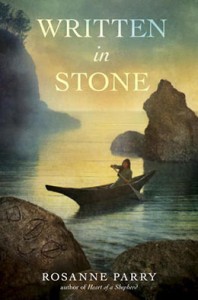
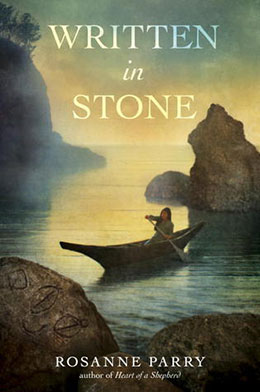
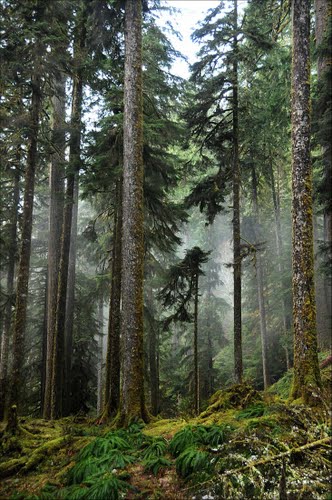
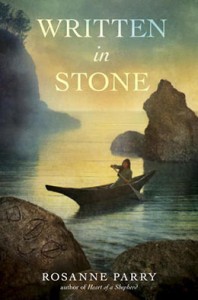
written_in_stone260not mine is wrong. Making things up is what a fiction writer does.  When the cover team was meeting I sent them a bunch of photographs of the Olympic Peninsula so they could get a feel for the ecosystem. The pictures included one of a petroglyph which is on public land and which commonly appears in works of non-fiction. I was so happy to see Richard Tuschman, the cover artist, incorporate a few petroglyphs on the cover–inventing an element in the style of this art but not stealing what’s not his to copy.

The other major plot element which is made up is the natural gas vent at Shipwreck Cove and the stories the tribe uses to keep children away from a dangerous place.  The accusation that I’ve made up stories that don’t exist is dead wrong. I’ve told no stories belonging to the Quinault or Makah, real or made up. I have pointed out something that is distinctive and interesting about their culture though. These tribes use monster stories to keep their children away from danger without having to hover over them constantly. I was struck by how much freedom young people in the community had during my time in Taholah. They walked all over town freely and without immediate supervision but still under the watchful care of the entire community. Places that might be dangerous, such as the ocean with it’s powerful undertow and the dump which attracts bears, were bounded about, not with fences, but with scary stories that kept kids from wandering into harm’s way. If there was a natural gas vent near the town (and there might be, there were places I was asked not to go myself when I lived there) then certainly there would be stories to warn children away.

imagesAs I say in the authors note the cove and its contents are my invention. Whether or not petroleum is present on the Quinault or Makah reservations is something you’d have to ask them about. Each tribe has a natural resources department and they are the ones to speak (or decline to speak) about their reservation lands. Natural gas is present all over the non-reservation areas of the Olympic Peninsula but it’s not abundant enough that anyone has drilled for it so far. Wildcatting in search of oil and natural gas was very common in the 1920s, and business men with an eye to a quick profit were often unscrupulous in acquiring mineral rights to land. This is not only an injustice directed toward Native Americans. Many white farmers and ranchers fell victim to their swindles as well. And frankly, I’m tired of stories that cast the Indian as the hapless victim. I wanted a story where the Native American kid won and did so, not in some wildly unrealistic battle or singlehanded act of heroism, but in the manner that most of life’s battles are won: with words, and community, and the hard work of many years.


Pirates and Indians: a conversation about Written in Stone

I’ve been having an ongoing conversation with Debbie Reese on her blog  about Written in Stone. She did a review of the book and brought up lots of good questions which I’ve been gradually answering here and also in the comment section of her blog. I’d really encourage you to head over there an take a look. The link is highlighted above.

Debbie mentioned in her review that the bit about a child playing pirates and indians took her by surprise and she wondered if there was a story there. So here are my thoughts on that.

The word or phrase that pulls the reader out of the story is sometimes a flaw in in the author’s word choices and sometimes the inevitable result of what the reader brings to the page, but sometimes it is the intention of the author to invite a reader to pause outside of the story for a moment and reflect. Such is the case with the pirates and indians remark in Written in Stone. The reader is naturally expecting the phrase cowboys and indians so the pirate reference invites the observation that there no cowboys in this story and no horses.63174181


 Most Americans associate horses and teepees with Native Americans but that’s a very narrow picture of the more than 500 nations that reside here. The Quinault and Makah have never been horse cultures. The Olympic Peninsula gets 15 feet of rain a year. It’s part of the only temperate rainforest in North America.It’s very difficult to keep horses alive in such a wet climate and there’s nothing that grows natively for them to eat. These tribes are a maritime culture, two of the many tribes of the Pacific who make ocean going canoes. Their navigational skills are impressive. Historically they traveled as far north as Alaska and up the Columbia to Celilo Falls. Extensive canoe journeys are still made regularly. Most recently the Quinaults hosted an event which gathered hundreds of people from the native cultures of the Pacific who traveled to Taholah by canoe.

Written in Stone by Rosanne Parry


I am so pleased my cover artist Richard Tuschman chose a canoe for the cover of this book. I’m also thrilled that Random House paid attention to the lack of children of color on book covers in general and made sure Pearl appeared–not in silhouette–on the cover of this one.

There is a story about a contact between Spanish Pirates and the Quinaults which predates their contact with English speaking settlers. As the story goes the Quinaults resisted the pirates so fiercely at see that the Spanish fled and no Spanish ship ever landed on their shores again. It’s impossible to verify an event this old, but as used in the story as a passing reference, it doesn’t matter. The Spanish did travel in these waters. The Quinaults had experience fighting at sea. If it didn’t happen, it could have which is evidence enough for a work of fiction. If you’d like to learn a little bit more about the Quinault Canoe Society here is a link to their Facebook page.

The larger purpose of the reference though is to invite a conversation about what makes this ecosystem and this tribe and this culture different from other Native American tribes with which my reader may be more familiar. In my opinion the conversation that happens because of a book is far more important than anything that’s actually in the book. Which I why I’m grateful for the conversation Debbie and I are having about this Written in Stone.


Written in Stone and the Makah Whale Hunt of 1999

written_in_stone260Debbie Reese who writes the Native Americans in Children’s Literature blog has posted a review of Written in Stone and invited a conversation about the concerns she raised about the book. I’ve been chatting with her in the comment section of her blog. If you’d like to see that conversation the link to her blog is highlighted above. I’m also putting my comments here for easy reference to teachers and librarians who may have questions about the material in the book. I have been a teacher myself. I really love talking to teachers and librarians so if you have questions about the story or about using this book in your class, please join the conversation. 
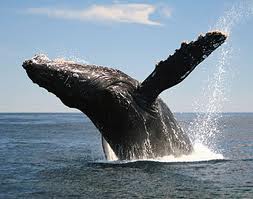
I was happy to see both Debbie and Beverly Slapin comment on the controversy surrounding the 1999 Makah whale hunt. It was big news in the region and I’m glad to hear that the news made the national stage as well. The best information on how hunts are conducted is found here on the Makah website. http://makah.com/makah-tribal-info/whaling/  There is much additional information to be found at the Makah Cultural Research Center in Neah Bay.
The resumption of whaling by the Makah encountered some vociferous opposition, most notably by the Sea Shepherd Society, but it also found support from a number of places. The International Whaling Commission verified that the gray whale is no longer an endangered species. There were marine safety issues to work out with local agencies. The hunt took place near a very busy international shipping lane, so that called for some communication and planning. Those negotiations were lengthy and complex but it’s not my impression that they were acrimonious. Unfortunately the peaceful working out of details does not make for exciting news, so I think the national outlets in particular paid attention to controversy more than cooperation. images
I heard the Chairman of the Makah Whaling commission speak in Portland about the day of the hunt shortly after its completion. He said that on the morning of the hunt, the media was not present when the whalers set out and arrived only after the whale had already been brought in. The helicopters and cameras did show up eventually and the atmosphere on the beach got a bit chaotic, but there was a brief window of time when the Makah were (not completely but nearly) alone with their whale, and that time meant a great deal to them. Cultural renewal is the phrase the chairman used to describe what that moment meant to the tribe.
That is the moment I wanted for Pearl and her great-granddaughter. The reader can deduce from the news helicopter chop that the moment of peace will be brief but it’s the prerogative of the novelist to pick the focus of a scene and I wanted to end with that one moment of connection for Pearl’s family and their whale.
Absolutely true that the activist that Pearl grew up to be would have been in the thick of the work of resuming the treaty right to hunt whales. In fact when I first thought about writing this story I wanted to write about the resumption of whaling. Self-determination of natural resources is a piece of the civil rights story that seldom gets told. It’s a rich history and one I’d love to see in books for kids.
Ahem! you publishing professionals who have said in my hearing that there’s a need for more middle grade non-fiction, this is the perfect topic for a non-fiction series! It involves geography, history, a variety of Native and Non-native cultures, biology, chemistry, climate change, economics, international trade. Think of the possibilities for critical thinking and curriculum connections! 
 
Back to the topic at hand 🙂
I left the whaling controversy out of Written in Stone for several reasons. Most of all I wanted to keep the focus on Pearl as a teenager in the 1920s and leave the 1999 whale hunt to serve as a frame and show that although the Makah lost whaling in the 1920s, it was not lost to them forever. It also shows that the Makah have not vanished nor maintained an Amish-like distance from the things of modern life, but continue to live and thrive in the same place they’ve always lived.
As I researched the whale hunt, the piece of it that really interested me was that the Makah, who had organized their culture for centuries around whale hunting, had to gave it up when the whale populations plummeted in the Pacific as a result of industrial whaling. That cultural survival piece of how to go on being the people that you are when something that so defined you is gone. That’s interesting to me personally and I think it’s something that people from a wide variety of cultures can relate to.
It’s true that I’m writing as an outsider to the Makah experience. A fiction writer is always writing outside of her experience. However, the Irish have long suffered the suppression of their culture, language, music, literature, and dance. And I know how I feel about playing a jig or hornpipe on my violin that’s hundreds of years old or dancing a set from my father’s county in Ireland; it’s an avenue of insight for me. Many people have an experience of cultural loss in coming to this country and although it is not the same experience it does make the story more accessible to the reader. So I chose to focus on the cultural survival aspect of this story rather than the resumption of whaling.
I also felt that a contemporary story about the Makah whaling experience would be better told by a whaler or other member of the tribe. I’d much prefer to use my book, imperfect instrument that it is, to nudge local writers in the direction of writing and publishing. In fact I’m happy to hear you’ll be in Washington. I’ve been developing the position of Youth Outreach Coordinator in our local SCBWI, in part, for the purpose of fostering a more diverse generation writers. Perhaps that’s an area where we could work together. One of the benefits of having a book published at a large publishing house is that it can attract attention to an issue.  There is still so little in print about tribes of the northwest, and my hope is that if this book does well enough, then other publishers will see the potential for more books set among these tribes and addressing these vital issues–a need that could be filled by local writers.
I’ll stop here for today but later this week I’ll get to the pirates and indians bit that Debbie asked about on her blog post because, yes, there is a story about that!
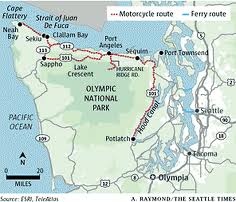
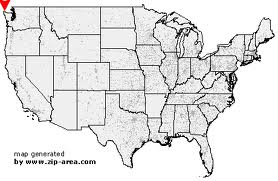
Below are maps of Neah Bay in case you are not familiar with the Olympic Peninsula, and a picture of the other thing the Makah are famous for–an excellent halibut fishery.
images-2
images-1
images-3