The expectations for the use profanity in children’s fiction are pretty clear. It’s commonplace in YA novels and completely absent in picture books and easy readers. But middle grade fiction takes the middle ground. Is swearing okay in a middle grade book? Well, it’s complicated. The issue is balancing authenticity with respect for your audience. Everybody encounters profanity; it is a language intensifier and can be useful in conveying the weight and reality of your characters situation. And yet it is the nature of profanity to offend, so any use will have consequences in how the book as a whole is received. 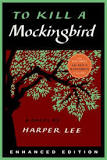 As a practical matter MG books with profanity tend to be shelved with YA no matter how young the character is. This is not necessarily a problem, To Kill a Mockingbird and it’s 9 year old protagonist Scout have been doing just fine in the YA section of the library for the last five decades. Even so any use of profanity should be carefully considered. When I’m confronted with an opportunity to use a swear word in my novels, here are five choices I consider.
- Omit
Every time I use profanity I rewrite the scene with out it, let it sit for a day or two and read the result out loud. I have been surprised by how often the scene was stronger without the swear word. Sometimes profanity is just a habit of the author and not integral to the character’s worldview or the movement of the plot.
- Reduce
 My editor once told me that swearing is loud on the page in a way that it is not in real life. I think of it as the equivalent of yelling or texting in all caps. As the mom of many I can tell you yelling is most effective when used sparingly—usually when lives are at stake. I think the last time I actually yelled at home was when someone’s sleeve caught on fire while roasting a marshmallow. Because swearing functions as an intensifier, it’s power is diluted by overuse. If I am working with a character who would naturally swear a lot, I’ll run a word search and see if I can limit the swearing to places where it will have the most impact.
- Evade
Sometimes you can duck the issue when the swearing is done by a non-viewpoint character. When I was working on Second Fiddle I knew that the moment that the girls discovered that they were all alone in Paris with no money, no passports and no return train tickets, any normal eighth grader would swear. But my main character wasn’t really the swearing type. Instead, I had her report that her friend said every swear she knew in English and then moved on to exhaust her supply of swear words in French and German. This preserved the authenticity of the scene without getting into a specific swear word.
- Substitute
Here is one of the more entertaining devices of MG fiction. Most kids get in trouble for swearing, and yet they have the same need for the occasional language intensifier as everyone else. So kids are great at making up substitutes. It’s the “drat, darn, and golly” solution, and it has great comic potential.  The advantage to a curse word substitution is that it can also serve to convey information about the character and setting and lighten the mood of an otherwise tense situation. We had a fascinating conversation at a bookstore event recently with some women who wrote adult mysteries. There is an expectation in adult cozy mysteries that swearing is omitted so this author had her spice shop owner detective say things like, “Well that just frosts my chili peppers!” I had no idea such rules extended to the world of adult books.
- Commit
There are circumstances in which the first four choices are wrong for the voice of the character or the gravity of the situation. And in those cases swearing maybe appropriate. Freedom of Speech means nothing if we never use it, and if you have used profane speech appropriately in your book you will find both people who passionately attack any use of profanity and those who just as passionately defend your right to tell the story as you must, free of censure. I opted to use swearing to a very limited extent in Heart of a Shepherd, having considered and discarded the above considerations, and it has done no harm whatsoever to the book. It was warmly received, sold well, and was carried by Scholastic Book Clubs. A few libraries don’t shelve it in k-4 schools. I really have no argument with that. Most teachers who read it aloud chose to skip or modify the swear word in the classroom. No argument there either. On the other hand, many teachers and parents have told me that because they weren’t expecting profanity in a middle grade book, it gave them a good opportunity to discuss where profanity is socially acceptable and not, and what it was about that particular scene that made a character swear when he ordinarily wouldn’t. In my opinion that’s a conversation worth having.
I’d love to hear what other people consider when making decisions about profanity, both in terms of writing and in terms of sharing books with middle grade kids as a parent or teacher or librarian.

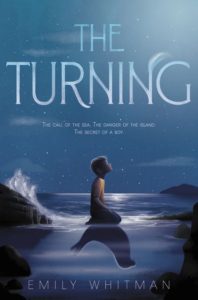 Emily Whitman is the author of THE TURNING, a fabulous story steeped in the selkie mythology of folk who can shape sift into seals. She will be kicking off the year with a look at what really makes a setting sing.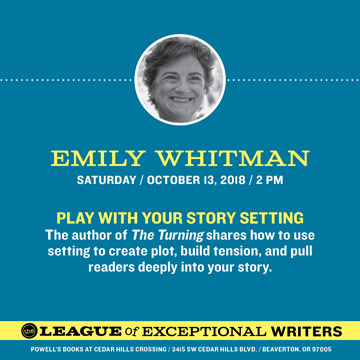
 le
le
 mother’s field. It’s an account of how the enterprising Dr. Snow and a couple of street urchins proved that a cholera epidemic that a broke out in Victorian London was caused not by the heavily polluted air but by the contaminated water in the Broad Street pump.