Although I’m still relatively new to being a published author, I’ve already done more than a hundred school visits. They are often long days, but I find them energizing and they really motivate me to finish the next book. Often a teacher catches my eye during a visit and wants to have a word with me about a student. Almost every time it’s an avid writer who produces volumes of stories or poems—finished, unfinished, skillfully written or simple, wildly creative or somewhat familiar. And what they want to know is what to do with all that writing. 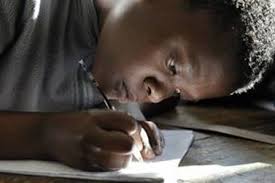 Teachers are great at teaching children who can’t write or won’t write or need lots of support to write. I am routinely impressed by the dedication of teachers I meet. So they can see that the avid writer needs guidance, too, but they are often at a loss about where to begin. Parents of these kids are often equally in the dark—proud, but unsure of how to best support a budding author. I have four kids myself, some of whom are avid writers so it’s a topic I’ve given a lot of thought. Here are three things you can do to nurture the young writer in your life.
- Help them save and safely store their work.
I’m bad at this myself. I love my stories but I don’t take very good care of them.  One of the most helpful things a teacher or parent can do is set up a file to keep stories both those finished and those abandoned. Most working writers begin as many as a dozen stories for every story they finish. So it isn’t important for your avid writer to finish every project they begin. Learning when to set aside a story that isn’t working is an important skill, too. But many times a writer will return to an old idea with a fresh insight and make a new story from one that wasn’t working before. Sometimes a character that didn’t work on a first try is exactly what you need in a different story. So having those files accessible is a gold mine. If your students write on a computer, getting them in the habit of a daily back up to a disc or thumb drive helps. Because thumb drives are easily lost, it’s also good to email a file and store it at the email account.
- Help them find with a time and place for writing.
 When writers get together, one of the most common topics of conversation is the struggle of finding a time and place to write. Some young writers are great at tuning out their surroundings and writing wherever they are—school bus, dinner table, math class. This of course has problems of it’s own. But students who need a little privacy to write may need help finding a quiet corner of the classroom or an undisturbed nook in the house, and a few free afternoons a week.
I know a 4th grader who came to school one day on fire with a great idea for a screenplay. She begged her teacher for time to write it and he agreed, letting her use the class computer through all the lessons, recess and even lunch that day. In five hours this girl wrote the first three and a half acts of a screenplay. In the last half an hour of the day the teacher asked her if she could show at least a part of her work to the class so they could see what a screenplay looks like. She chose a scene she wanted feedback on and got the class to read the roles out loud. As a result a half dozen other kids got the screenwriting bug for a few weeks. A gift of time like that is a rare and precious gift for a young writer and went a long way to helping this child believe she could be a professional writer some day.
Instructional time is precious and extra curricular activities are valuable, too, but for the avid writing child nothing is so enriching as simply the time and place to create something new.
- Help them find a writing community.
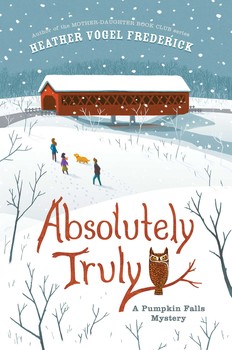 I don’t know a single author who works alone. Most of us have critique groups or at least a writing partner. They are people who help us work out all the many details of writing well. It means the world to me that if I’m stuck I can call on my neighbors Heather Vogel-Frederick, author of Absolutely Truly, or Susan Blackaby, author of Brownie Groundhog and the February Fox, and go out for coffee and just talk through a writing problem.
For young people community can be hard to find. A teacher who is aware of two or more avid writers might encourage them to join the newspaper staff or school literary magazine. Younger students might find kindred spirits in a Newbery Club or on a Battle of the Books team.
The connection need not be formal and organized. I met two eighth grade cousins on a school visit who have an ice cream date every Sunday after church to work on the YA novel they are writing together. Some kids enjoy fan fiction websites because they create a sense of community and offer a place to share work.
Some communities are wonderful about offering writing opportunities for children and teens. Here are two of the best children’s writing communities here in Portland, Oregon and I hope you will add your local resources in the comments.
League of Exceptional Writers.
Every Second Saturday from 2 to 3 at the Powells Bookstore on Cedar Hills Blvd. in Beaverton from October to May.
Come meet your fellow writers, learn the craft of writing from amazingly talented and friendly authors, bring your own work to share and get feedback. Anyone ages 8-18 is welcome.
We have two sessions left this school year. April 11th Anne Osterlund will talk about developing strong characters. On May 9th Fiona Kenshole will talk about the role of literary agents in the book world.
First Tuesdays of the month from 7 to 8, the young Willamette Writers meet in their own space during the meeting of the adult Willamette Writers. They practice the craft of writing in the company of great writers from all over the region. The meeting is held in the Old Church on SW 11th and Clay in Portland.
If you’ve got a great kids writing group in your town, please share in the comments!