I’m going to try to read all the books that are on the 2015-16 OBOB list with me and I’m so happy to start with a wonderful book by my friend and fellow Portlander, Deborah Hopkinson. This is a story after my heart because epidemiology was my 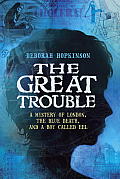 mother’s field. It’s an account of how the enterprising Dr. Snow and a couple of street urchins proved that a cholera epidemic that a broke out in Victorian London was caused not by the heavily polluted air but by the contaminated water in the Broad Street pump.
Three things for a kid reader to love:
1. Any kid who lives Bones or CSI or other tv crime scene procedurals will love this. It’s full of real nitty gritty details of how to prove that disease is water-borne when the water tastes fine and the air stinks. Great fun, and not “teach-y”
2. Cool historical maps of the epidemic are in the back matter. Love Maps!
3. The narrator, a kid who goes by the name Eel, is appealing and keeps the events on a very human scale. In finding and answer to the riddle of the Broad Street pump, Eel finds a home and protection and education for his beloved little brother.
Something for the writer to think about:
Any story about an epidemic is going to be tragic and this one doesn’t shrink from death. However, and this is the important distinction to me, it doesn’t revel in death or glamorize suffering. It’s a fine line to walk and I think it’s handled beautifully. Well worth a read just to see how Deborah gets the balance just right.
Also I’m going to tag this as a diverse book in terms of class. It addresses very directly the injustices Eel faces because of his economic status. It’s easy to over-look or romanticize the poor. Here’s a book that in my opinion does them justice. The low-income characters are a mix of good and bad actors and the upper-income characters are an equally mixed bag in terms of personal virtue. Bravo!

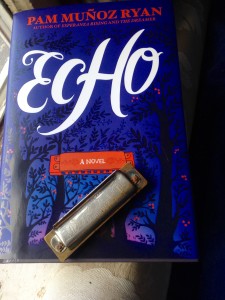 Lost and alone in a forbidden forest, Otto meets three mysterious sisters and suddenly finds himself entwined in a puzzling quest involving a prophecy, a promise, and a harmonica. Decades later, Friedrich in Germany, Mike in Pennsylvania, and Ivy in California each, in turn, become interwoven when the very same harmonica lands in their lives. All the children face daunting challenges: rescuing a father, protecting a brother, holding a family together. And ultimately, pulled by the invisible thread of destiny, their suspenseful solo stories converge in an orchestral crescendo.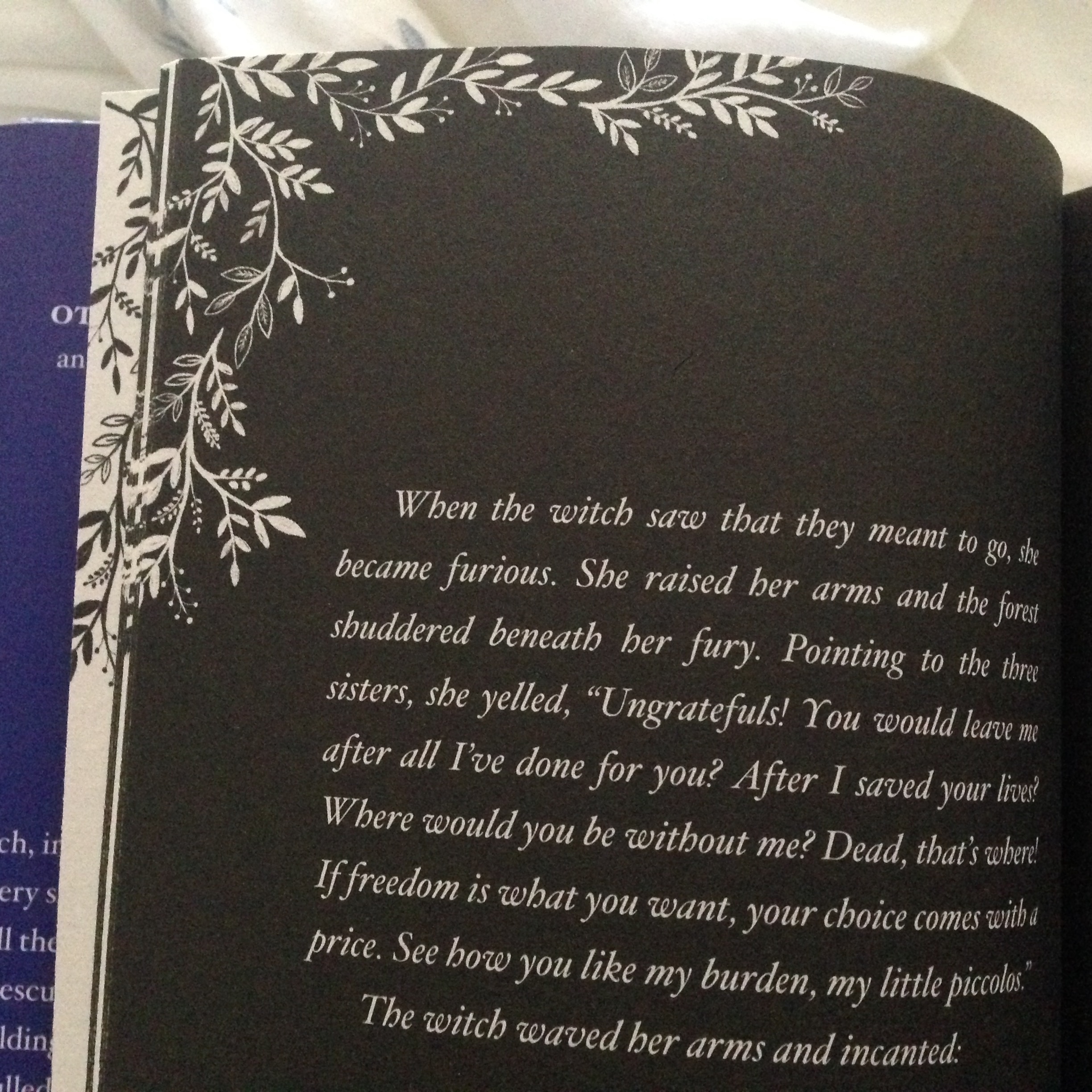
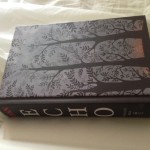 to edge it up to YA. This is the perfect book for that tender-hearted teenaged reader who is not interested in sexual relationships and blatant violence. It’s also great for that really young high level reader who needs a challenge and a story with substance but isn’t up for YA content.
 .
. riting nature based non-fiction. It was a really refreshing break in my routine to spend some time thinking about what makes non-fiction work. This year I’m going to take a workshop from Erika Wurth and I’m looking forward to working on a group of adult short stories I’ve been fiddling around with over the last year or so. Fishtrap is held in one of the most beautiful spots on earth, Wallowa Lake, and it’s staffed but the least stuffy literary crowd you’ve ever met. I’ve grown as a writer and felt more connected to writers in my region every time I’ve
  gone. If you’re looking for something different in a summer workshop,
  I’m also looking forward to doing a little teaching in Portland at a brand new young writers workshop headed up by Kari Nelsestuen, a passionate advocate for young writers. I’ll be guest teaching a session for both the younger and older students. It’s called PDX Young Writers Camp and I’d love to send you to the website to sign up but I believe it’s already full. If you have a young writer who’d be interested in future writers camps send me note via the contact button here and I’ll get you on Kari Nelsestuen’s email list for next summer.