Author Archives: Rosanne Parry

Using Pinterest with Middle Grade Novels

I don’t like to think of myself as a Luddite. I enjoy technology and social networking, but I confess when I first heard of Pinterest I was filled with dread. I didn’t need another distraction from my deadlines. I didn’t have an overwhelming desire to look at every cute kitten that ever lived or learn about people’s quirky taste in shoes. I had every intention of giving this new social network a pass.

But then while working on the author note for my book Written in Stone, I wanted a visual for a particular type of ocean going canoe made by tribes from the Pacific Northwest. I found a group of boards on Pinterest called the Native American Encyclopedia. It has, among other things, a large collection of historical photographs organized by tribe including a variety of images of canoes that I needed.

It got me thinking about ways I could use Pinterest to make my historical novel more useful to teachers and vivid for students.

Children in every single state study Native Americans at some point in their middle grade years. I know teachers are looking for good books with Native American characters. I also know that most people, when they think of Native Americans, default to the Great Plains tribes and picture the horse and teepee cultures of the prairie.  My book is set among the cedar and salmon people of the Olympic Rainforest in western Washington. Most people don’t have a visual reference point for this incredibly rich and beautiful culture.
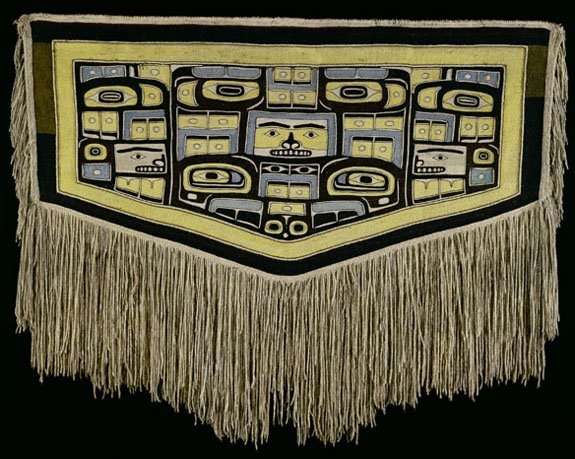
115_lg The Olympic Peninsula is home to the only temperate rainforest in North America. Most people don’t have a visual vocabulary for the temperate rainforest either. 63174181

I would have loved to do an illustrated book like the ones I remember from my childhood, but unfortunately illustrations would price the book out of reach for already struggling school libraries. It’s my hope that Pinterest can serve to fill the gap. I set up a board for each of my novels with images of the setting and key objects from the story.

The thing that makes Pinterest a particularly useful tool is the space at the bottom of each picture with room to write a caption. Most users put a very minimal title in the caption space, but there is room enough for 500 characters so I can give some context for an image or mention how it relates to my book.

It took me about 20 minutes to learn how Pinterest works and set up a board for each of my books. I spent about an hour gathering the initial images for each board. I spend about an hour a month adding images.  That is a manageable amount of investment in time for what I hope will be an engaging and useful tool for classroom teachers and book clubs.

I’m still very new to Pinterest and I’d love to hear from teachers whether they use it already or would consider using it in the future. Here’s the link to my Written in Stone board. Please take a look and leave a comment!
Middle Grade Monday Book Review: Oddfellow’s Orphanage

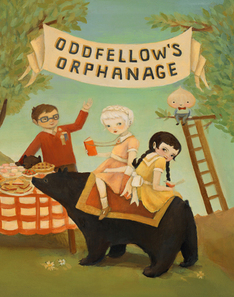
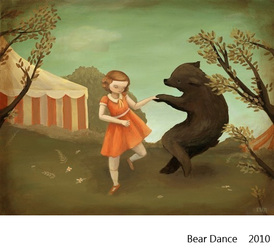
5462907Oddfellow’s Orphanage by Emily Winfield Martin

What do an onion-headed boy, a child-sized hedgehog, and a tattooed girl have in common? They are all orphans at Oddfellow’s Orphanage! This unusual early chapter book began life as a series of full-color portraits with character descriptions. Author/illustrator Emily Martin has fleshed out the world of Oddfellow’s  with a cozy collection of tales that follows a new orphan, Delia, as she discovers the delights of her new home. From classes in Cryptozoology and Fairy Tale Studies to trips to the circus, from Annual Hair Cutting Day to a sea monster-sighting field trip, things at Oddfellows are anything but ordinary . . . except when it comes to friendships. And in that, Oddfellows is like any other school where children discover what they mean to each other while learning how big the world really is.

Three things to like about this book as a reader

1. What drew me to the book initially was Emily’s gorgeous artwork. It has a distinctive and retro feel, reminding me of the 1930s era needlework and quilts that my mother-in-law makes. Illustration used to be the norm in middle grade fiction, but lately the books with spot illustrations throughout tend to be very loose and cartoon-like in their style. Oddfellow’s Orphanage has carefully rendered art with a classic feel on every page.

2. The book also has a gentle and distinctive and retro sound. Each chapter is its own vignette, with a conflict simply presented and sweetly resolved. The book follows the cycle of a year through the eyes of the newest orphan Delia. Every chapter heading is faced by a portrait of a child or teacher from the orphanage and a brief account of how they came to reside at Oddfellow’s.

3. This is a book that begs to be read aloud by a grandparent. It’s perfect for a young tender-hearted reader and anyone looking for a break from the pizazz and relentless pacing of many contemporary novels.

Something to think about as a writer

One of the reasons I picked this book up is that I have an off-again on-again project for younger middle grade readers. Oddfellow’s Orphanage is so geared toward the visual it’s making me think about how I would want my own story to be illustrated–which elements I should describe myself and which I should leave for the illustrator to illuminate. How many illustrations per chapter? What would be best served by spot art and what would make a good full page illustration? I know that most of those choices will belong ultimately to the illustrator but I’m going to make my next revision with the visual more in mind.

How I found this book

It was my pleasure to appear with Emily at a teachers’ book event at the Vancouver Barnes and Noble last month. I bought a copy of her book for my mother-in-law. We are both published by Random House. I make no claims whatsoever to objectivity in my reviewing.

You can read more about Emily and see many examples of her artwork at her website.

2835708


Welcome

Welcome to my brand new Writer in the Rain blog!

I confess I was reluctant to begin blogging because with a house full of busy teenagers and aging parents and my own writing deadlines I didn’t want one more thing to keep me from doing what I love.

But here’s the thing. I love connecting with readers and writers and teachers and librarians. Book people are my favorite people of all. So here are my goals for the blog. I hope to post once a week. I plan to participate in the Middle Grade Monday book reviews twice a month. And on the other two Mondays I’d like to put up something interesting about what I’m learning as I try to make good stories come to life and share those stories in the world.

From time to time I’ll be promoting some book event or other that I’m involved in. My Toot of the Day is for the class I’ll be teaching this summer at TAG camp for Saturday Academy. If you know a  kid in NW Oregon who loves to write and would enjoy my Vampire Free Fiction class, encourage them to sign up here. The Camp for rising 4th and 5th graders is the last week of June and the camp for middle schoolers is the first week of August. It’s heaps of fun! I can’t wait!

SALogo2012withgreenbackground

MMGM2

The Death of Copyediting

I’ve heard about the death of copy editing many times, both from authors and librarians, lamenting the lack of time for copy edits and the multiplicity of errors in books. I can only speak from my own books at Random House, but in my experience copy editing is alive and well—distressingly so.

This might not be everyone’s experience. Perhaps it’s just my own manuscripts that go out emblazoned with the words Not Written By An English Major upon their foreheads. My most recent manuscript was copy edited by no less than three people—each with her own color of pencil. As I read through it was clear to me that Violet and Indigo did not like each other very much, but Green, obviously the middle child of the group, was there to say, “Come on, girls. Can’t we get along? It’s just a hyphen!”

I was left with my highly-embarrassed Scarlet pencil to follow after my much wiser sisters of syntax who marked no less than a dozen items on every single page of a manuscript that ran longer than 160 pages. It’s nearly 2,000 copy edit marks!

My job for and entire week was to think about every single one of those marks and make a decision. Often it was the fairly easy. “Duh, of course the comma goes there. Why didn’t I notice that ages ago?”

Although to be honest, sometimes it’s more like, “Fine, what ever you say! Who cares if concertmaster is one word or two?”

And I confess that from time to time it’s even, “Seriously? There’s a rule about that? Dang! I should have been paying attention in English.”  Lucky for me Violet, Indigo, and Green were paying attention. In fact, they were the honors students, I’m sure of it.

Every now and then I have to say, “Now look, I know your suggestion is technically superior in every way but no kid would say or think this. Ever. Not in any century or any other planet. Sorry.” For reasons I do not begin to understand this is abbreviated STET.

I can see why copy edits get neglected. It’s difficult, often tedious work, it requires not just technical excellence from the copy editor, but also artistic sensibility, and it is frequently accomplished on a tight deadline.

And so, dear Violet, Indigo and Green, Thank you for your diligence. Thank you for your depth of knowledge in English, and for this book, German, French, Russian and (no kidding) Estonian. I am completely dazzled that you found a speaker of Estonian! Go Violet! Thank you for your probing questions, your willingness to hunt up accurate maps and even do the math on rates of exchange. I’ll never make fun of an English major again! Most of all thank you for respecting my reader enough to help me make Second Fiddle the best book it can be.


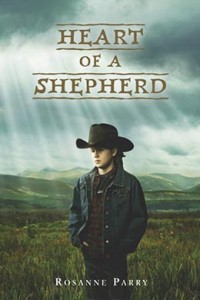
How I got my Idea for Heart of a Shepherd


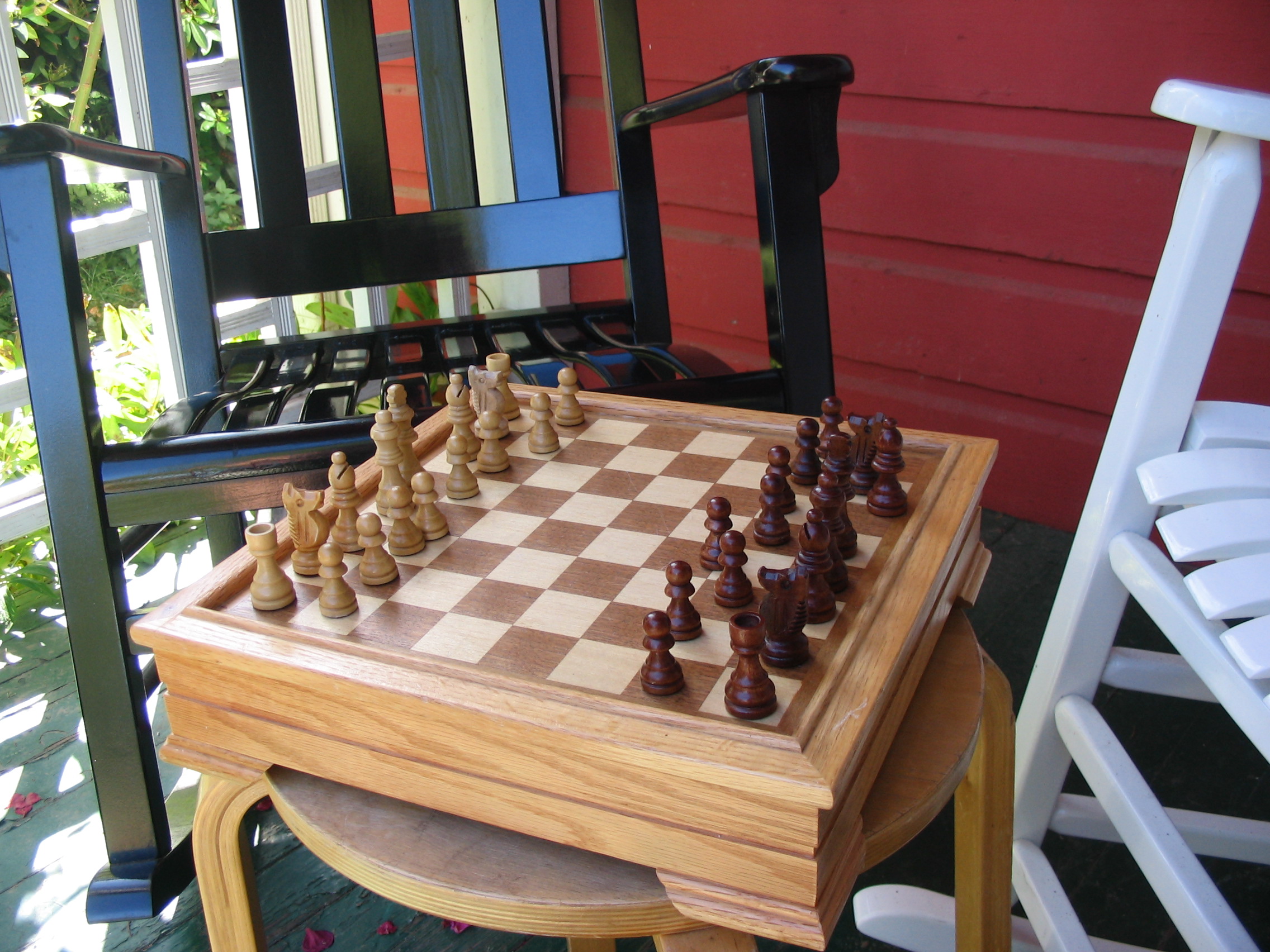
    Heart of a Shepherd by Roseanne ParryNine years ago in April, I wrote a sonnet for poetry month as I try to do every year. At the time, my son was six and my dad was teaching him to play chess, so I wrote a practice piece about that. A few years later, I got an idea for a short story about grandfather and grandson playing a game of chess which eventually became the first chapter of Heart of a Shepherd. I set that story on a ranch in Eastern Oregon because I had recently visited my friend Maria out in Malhuer County, Oregon. The idea came to me in the grocery store late at night, so I added a pencil and composition book to the groceries and then sat in the parking lot under a streetlight to write the story. I wrote the whole draft in about as long as it takes a cup of hot chocolate and a quart of ice cream to reach thermal equilibrium.
Winning the Kay Snow Award

I sent THE CHESS MEN off to a few contests and won a Kay Snow Award from Willamette Writers in 2003. I sent it out to a few editors. They all said, “This is good writing, but no thanks.” Jim Thomas at Random House, who I had met at an SCBWI conference said, “Great writing, send me something else.” So I set the short story aside and worked on other things

But something about that story and the relationship between the boy and his grandpa stuck with me, so I tinkered with it. By that time, the war in Iraq was underway and the experience of small towns in Oregon losing their most valuable citizens to deployment was on my mind, so I added that as a framework for what I thought of as a collection of short stories that would be something like Graham Salisbury’s BLUE SKIN OF THE SEA, a book I admire very much.

Finding my Editor

I wrote three more stories and got completely stuck. Fortunately, another Random House editor, Wendy Lamb, critiqued them at an SCBWI conference and was warmly encouraging of my efforts. All together, it took me two years of intensive study, research and writing to come up with a draft of Heart of a Shepherd I was satisfied with.

I sent it to Jim Thomas because I remembered how passionate he was about getting good “boy stories” out there. So after several years of hearing, “Great writing send me something else”, Jim said, “This is the one I want.” That was Sept 25th 2006, seven years and five months after I first wrote a sonnet about a boy and his grandpa playing chess.

IMG_1913